
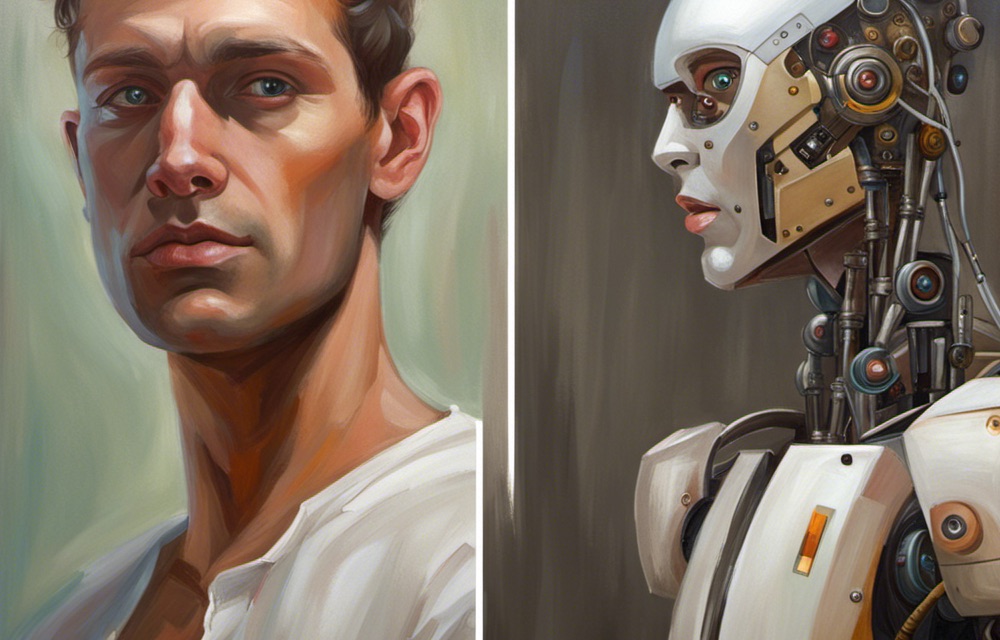
A critical look at the challenges and barriers to using AI for professional voiceover projects.
Text-to-Speech AI versus Voice Cloning: Two Different Technologies with Similar Challenges.
It is important to note that TTS AI and voice cloning are two different technologies that work in different ways. TTS AI generates a human-like voice based on text, while voice cloning replicates the voice of an existing speaker with a different voice.
However, both technologies face similar challenges. They require significant time to make adjustments and corrections, and often cannot provide the sonic quality and emotional depth delivered by a professional voice actor recorded in a professional setting.
Computing capacity and cost
An additional issue that is often overlooked is the significant computational capacity required to generate TTS output and voice cloning. AI vendors invest in powerful hardware and software to handle the processing complexity. This infrastructure not only incurs high acquisition and maintenance costs, but also ongoing operational costs, particularly for power and cooling. The true cost of AI-generated content can only be realistically estimated in the long term, as venture capital to fund the costs is abundant at the instantaneous moment.
Companies that rely on these technologies should consider these cost factors to get a realistic estimate of the total long-term cost of generating voiceovers and AI voices.
Special case of dubbing: Why cloning could work here in the long run after all
In dubbing productions, a special situation arises that could make the use of voice cloning technologies more profitable for producers than hiring professional voice dubbing experts for dubbing, especially in the case of large amounts of material.
Actors in movies themselves already provide “source material” that contains emotional nuances , voices and mood variations that AI technology could exploit. In the context of dubbing, emotional and vocal nuances could be transferred here in another language. Here, voice cloning + AI translation could be combined in such a way that the original recordings are used as a basis to create completely finished dubbed movies in other languages.
But again, we are still far from a working solution, and it is questionable whether humans would even accept being entertained by “robots”. Furthermore, there are still some unresolved legal issues here.
Conclusion: The value of professional speakers
Although AI technologies are quite impressive, the question we have to ask ourselves is whether these technologies offer any real advantage for professional use in dubbing studios, advertising studios, or radio stations.
In fact, these technologies are less efficient than the direct use of professional speakers.
Human speech is complex and nuanced, and it can be difficult to capture those nuances in AI models. Professional speakers, on the other hand, bring experience and emotional intelligence to their work, resulting in high-quality and engaging audio content. In short, they get to the heart of the context in one take, whereas AI takes five or six attempts to do so and still doesn’t deliver 100% perfectly.
Despite advances in AI technology, hiring professional voice actors remains the most reliable and efficient way to create high-quality voiceovers.
Quote:
Finally, a quote from Bernd Biemüller, an experienced professional in the dubbing industry who has been active as an audio producer for over 20 years:
“The current situation reminds me of the 90s, when everyone could create flyers inexpensively thanks to Photoshop. Many believed this would herald the end of professional designers. But the reality was different: After only a few years of having to endure terribly unprofessional flyers in many cases, people returned to professional designers if they wanted to produce flyers. The reason? The quality and expertise. Photoshop could provide the tools, but users lacked the experience and artistic understanding to create effective and aesthetically pleasing designs. These were the skills that professional designers offered.”